
Nursery Trees
Our Nursery Tree Selection
We carry a wide selection of ornamental, shade, and evergreen trees suited to the Grand Strand climate. Browse our selection below and give us a call to check availability. These trees are available for order and typically take one to two weeks for delivery.
Evergreen Trees
Trees and shrubs that hold their color all year — no bare branches in January.

Banana Shrub
An evergreen flowering shrub or small tree prized for its intensely fragrant banana-scented blooms and glossy foliage.
Height/Width: Typically 10–20 ft. tall and 6–12 ft. wide with a dense, upright rounded form.
Overview: Banana Shrub (Magnolia figo, formerly Michelia figo) is a beautiful evergreen ornamental known for its fragrant flowers, attractive glossy leaves, and year-round appeal. It works well as a specimen, privacy screen, or patio accent.
Seasonal Interest: Creamy yellow flowers with burgundy edges bloom from spring into early summer, filling the air with a sweet banana-like fragrance. Glossy evergreen foliage provides color throughout the year.
Planting: Plant in full sun to partial shade in fertile, well-drained soil. Protect from harsh afternoon sun in extremely hot locations.
Watering: Water regularly during establishment, then deeply during prolonged dry periods.
Care: Requires little maintenance. Prune lightly after flowering to maintain shape. Mulch to conserve moisture and protect roots.
Benefits: Highly fragrant flowers, evergreen foliage, compact growth, pollinator attraction, and excellent specimen or foundation plant.
Growth Rate: Moderate, typically 1–2 ft. per year.
Why People Love It: Its unforgettable banana fragrance, glossy evergreen leaves, and elegant appearance make it a favorite in Southern gardens.
Did You Know?: Despite its common name, Banana Shrub is actually a magnolia relative and belongs to the Magnolia family.
Chindo Viburnum
A fast-growing evergreen shrub with glossy foliage, fragrant spring flowers, and vibrant red berries.
Height/Width: Chindo Viburnum typically matures at 12–20 feet tall and 8–12 feet wide..
Overview: Chindo Viburnum is a popular evergreen shrub valued for its lustrous dark green foliage, rapid growth, fragrant flowers, and colorful berries. It is an excellent choice for privacy screens, hedges, or as a striking specimen plant.
Seasonal Interest: In spring, clusters of fragrant creamy-white flowers bloom and attract bees and butterflies. Summer brings rich, glossy evergreen foliage, followed by brilliant red berries in fall that gradually mature to black and provide food for birds. The dense evergreen foliage offers attractive color and screening throughout winter.
Planting: Plant in full sun to partial shade in well-drained soil. It tolerates a wide range of soil types and performs exceptionally well in the warm, humid Southeast.
Watering: Water deeply during the first growing season to establish a strong root system. Once established, water during extended dry periods.
Care: Requires little maintenance. Prune after flowering if shaping is desired. Apply mulch around the base to retain moisture.
Benefits: Provides year-round evergreen beauty, fragrant blooms, colorful berries, excellent privacy, wildlife value, and dependable landscape performance.
Growth Rate: Fast, typically growing 2–3 feet per year under favorable conditions.
Why People Love It: Customers love Chindo Viburnum for its rapid growth, dense evergreen foliage, fragrant flowers, colorful berries, and ability to quickly create an attractive privacy screen.


Waxleaf Ligustrum
A dense evergreen shrub or small tree with glossy foliage, fragrant flowers, and outstanding versatility.
Height/Width: Waxleaf Ligustrum typically matures at 8–15 feet tall and 6–10 feet wide.
Overview: Waxleaf Ligustrum is a popular evergreen landscape plant valued for its dense, glossy foliage, naturally compact growth, and adaptability. It is commonly used as a privacy screen, hedge, foundation planting, or trained into an attractive small tree.
Seasonal Interest: In late spring to early summer, clusters of small, fragrant creamy-white flowers bloom and attract bees and other pollinators. These are followed by small blue-black berries that provide food for birds. The lustrous evergreen foliage maintains rich green color throughout the year, creating lasting landscape interest.
Planting: Plant in full sun to partial shade in well-drained soil. Waxleaf Ligustrum adapts well to sandy, loamy, and clay soils and tolerates heat, humidity, and coastal conditions.
Watering: Water deeply during the first growing season to establish a healthy root system. Once established, water during extended dry periods for the best appearance.
Care: Requires very little maintenance. Prune after flowering or as needed to maintain its desired shape. Apply mulch around the base to help conserve moisture and suppress weeds.
Benefits: Provides year-round evergreen beauty, excellent privacy screening, fragrant blooms, wildlife value, rapid establishment, and dependable performance in Southern landscapes.
Growth Rate: Moderate to fast, typically growing 1–3 feet per year under favorable conditions.
Why People Love It: Customers love Waxleaf Ligustrum because it creates a lush, attractive landscape quickly while remaining easy to maintain and highly adaptable to many landscape styles.
Loquat
An attractive evergreen tree that produces fragrant flowers, delicious fruit, tropical appearance and year-round landscape beauty.
Height/Width: Loquat typically matures at 15–25 feet tall and 15–20 feet wide.
Overview: Loquat is a small evergreen tree valued for its bold tropical-looking foliage, fragrant flowers, and sweet golden-orange fruit. It makes an excellent ornamental tree while also producing an edible harvest.
Seasonal Interest: In fall and early winter, clusters of fragrant creamy-white flowers bloom and fill the air with a sweet fragrance, attracting pollinators. During winter through early spring, golden-yellow fruit ripens and is enjoyed fresh or in jams, jellies, and desserts. Throughout the year, the large, dark green evergreen leaves provide a lush tropical appearance.
Planting: Plant in full sun to partial shade in well-drained soil. Loquat performs best in fertile soil but adapts well to a variety of soil types and tolerates coastal conditions.
Watering: Water deeply during the first growing seasons to establish a healthy root system. Once established, water during prolonged dry periods for the best fruit production and appearance.
Care: Requires little maintenance. Prune lightly after fruiting to maintain shape and remove dead or damaged branches.
Fertilize in early spring to encourage healthy growth and fruit production.
Benefits: Provides attractive evergreen foliage, fragrant blooms, edible fruit, wildlife value, excellent ornamental appeal, and year-round interest in Southern landscapes.
Growth Rate: Moderate, typically growing 1–2 feet per year under favorable conditions.
Why People Love It: Customers love Loquat because it combines the beauty of an ornamental evergreen with delicious fruit, fragrant flowers, and an easy-care nature.


Osmanthus Fortune’s Tea Olive
An elegant evergreen with fragrant white flowers, glossy foliage, and exceptional year-round beauty.
Height/Width: Fortune’s Tea Olive typically matures at 15–20 feet tall and 10–15 feet wide.
Overview: Fortune’s Tea Olive is a beautiful broadleaf evergreen prized for its lustrous dark green leaves, naturally dense habit, and intensely fragrant flowers. It is ideal as a specimen, privacy screen, hedge, or accent tree in Southern landscapes.
Seasonal Interest: In fall, with additional blooming periods in spring, clusters of small creamy-white flowers appear among the foliage, filling the air with a sweet apricot-like fragrance that attracts pollinators. The glossy evergreen leaves provide rich color and texture throughout the year, while the dense branching offers lasting winter interest.
Planting: Plant in full sun to partial shade in well-drained soil. It adapts well to a variety of soil types and thrives in the warm, humid climate of the Southeast.
Watering: Water deeply during the first growing season to establish a healthy root system. Once established, water during prolonged dry periods.
Care: Requires very little maintenance. Prune after flowering to maintain its natural shape or size. Apply mulch around the base to conserve soil moisture.
Benefits: Provides year-round evergreen beauty, wonderfully fragrant blooms, excellent privacy screening, heat tolerance,
and dependable performance with few pest or disease problems.
Growth Rate: Moderate, typically growing 1–2 feet per year under favorable conditions.
Why People Love It: Customers love Fortune’s Tea Olive for its unforgettable fragrance, glossy evergreen foliage, low-maintenance nature, and ability to create an elegant landscape all year long.
Fragrant Tea Olive
An evergreen shrub prized for its intensely fragrant flowers, glossy foliage, and year-round beauty.
Height/Width: Typically 8–15 ft. tall and 6–10 ft. wide with a dense, rounded habit.
Overview: Tea Olive (Osmanthus fragrans) is a classic Southern evergreen shrub valued for its sweet fragrance, glossy foliage, and easy-care nature. It is ideal for hedges, foundations, entryways, patios, and specimen plantings.
Seasonal Interest: Tiny creamy-white flowers bloom mainly in fall with occasional blooms in spring, filling the air with an unforgettable peach-apricot fragrance. Evergreen foliage remains attractive all year.
Planting: Plant in full sun to partial shade in fertile, well-drained soil.
Watering: Water regularly during establishment, then during extended dry periods.
Care: Minimal maintenance. Prune after flowering if shaping is desired. Mulch to conserve moisture.
Benefits: Exceptional fragrance, evergreen screening, pollinator attraction, low maintenance, and year-round color.
Growth Rate: Moderate, about 1–2 ft. per year.
Why People Love It: Its powerful fragrance and glossy evergreen foliage make it one of the South’s most cherished landscape shrubs.


Podocarpus
An elegant evergreen prized for its dense foliage, versatility, and exceptional year-round beauty.
Height/Width: Podocarpus typically matures at 20–40 feet tall and 10–20 feet wide.
Overview: Podocarpus is a versatile evergreen that can be grown as a privacy screen, hedge, specimen tree, or espalier. Its fine-textured, deep green foliage and naturally upright habit make it a favorite for residential and commercial landscapes.
Seasonal Interest: Podocarpus produces small, inconspicuous flowers in spring that are not showy. Its rich green evergreen foliage provides attractive color and texture throughout the year, while mature plants may produce small berry-like purple fruits that attract birds. The dense branching offers lasting structure and privacy in every season.
Planting: Plant in full sun to partial shade in well-drained soil. It adapts to sandy and loamy soils and tolerates heat, humidity, and coastal conditions once established.
Watering: Water deeply during the first growing season to establish a healthy root system. Established plants require supplemental watering only during prolonged dry periods.
Care: Requires minimal maintenance. Prune as needed to maintain the desired height or shape. Apply mulch around the base to conserve moisture and suppress weeds.
Benefits: Provides year-round evergreen screening, excellent privacy, outstanding versatility, heat tolerance, and dependable low-maintenance performance.
Growth Rate: Moderate, typically growing 1–2 feet per year under favorable conditions.
Why People Love It: Customers love Podocarpus for its elegant appearance, dense evergreen foliage, adaptability, and ability to create beautiful living privacy screens.
Native to South Carolina
Grown by nature for the Carolina coast. Native trees settle in fast, handle our heat and storms, and feed local birds and pollinators.

American Fringetree
A beautiful native ornamental tree celebrated for its fragrant, fringe-like white flowers and outstanding four-season appeal.
Height/Width: American Fringetree typically matures at 12–20 feet tall and 12–20 feet wide with a rounded, spreading canopy.
Overview: American Fringetree is a small native deciduous tree prized for its spectacular spring bloom, attractive dark green foliage, and adaptability. It makes an excellent specimen tree for lawns, patios, woodland gardens, and naturalized landscapes.
Seasonal Interest: In spring, masses of fragrant, snow-white, fringe-like flowers cover the branches before or as the leaves fully emerge, creating a stunning display that attracts pollinators. Summer brings rich green foliage, while fall offers attractive yellow color. Female trees may also produce blue-black berries that provide food for birds. The graceful branching structure adds winter interest after the leaves have fallen.
Planting: Plant in full sun to partial shade in well-drained soil. It prefers evenly moist soil but adapts well to many landscape conditions once established.
Watering: Water deeply during the first growing season. Once established, provide supplemental water during extended dry periods.
Care: Requires minimal maintenance. Prune only to remove dead or damaged branches after flowering if needed, and apply mulch around the base to help retain moisture.
Benefits: Provides spectacular spring blooms, supports pollinators and birds, offers excellent fall color, and is highly adaptable as a low-maintenance native landscape tree.
Growth Rate: Slow to moderate, typically growing 6–12 inches per year.
Why People Love It: Customers love American Fringetree for its unique flowers, manageable size, native beauty, and exceptional four-season interest.
Yaupon Holly
A versatile native evergreen prized for its dense foliage, colorful berries, and year-round beauty.
Mature Height: Typically matures at 15–25 feet tall and 10–20 feet wide.
Overview: Yaupon Holly is a durable, native evergreen that thrives in a wide range of landscape conditions. Its glossy green foliage, bright red berries on female plants, and adaptability make it one of the Southeast’s most dependable landscape plants.
Seasonal Interest: Fresh green growth appears in spring. Summer showcases dense evergreen foliage. In fall and winter, female plants produce bright red berries that persist for months and attract songbirds, while the evergreen leaves provide year-round color.
Planting: Plant in full sun to partial shade in well-drained soil. It adapts well to sandy, clay, acidic, or slightly alkaline soils and tolerates salt spray, wind, and urban conditions.
Watering: Water regularly during the first growing season. Once established, it is highly drought tolerant but benefits from occasional deep watering during prolonged dry periods.
Care: Requires very little maintenance. Prune as needed to maintain shape or create hedges and screens. Apply mulch to conserve soil moisture and suppress weeds.
Benefits: Provides year-round evergreen color, attractive berries for wildlife, excellent screening and privacy, strong drought and salt tolerance, and dependable performance in coastal and inland landscapes.
Growth Rate: Moderate, typically growing about 1–2 feet per year under favorable conditions.
Why People Love It: Customers appreciate Yaupon Holly for its versatility, low maintenance, attractive berries, nativeheritage, and ability to perform well in almost any landscape setting.
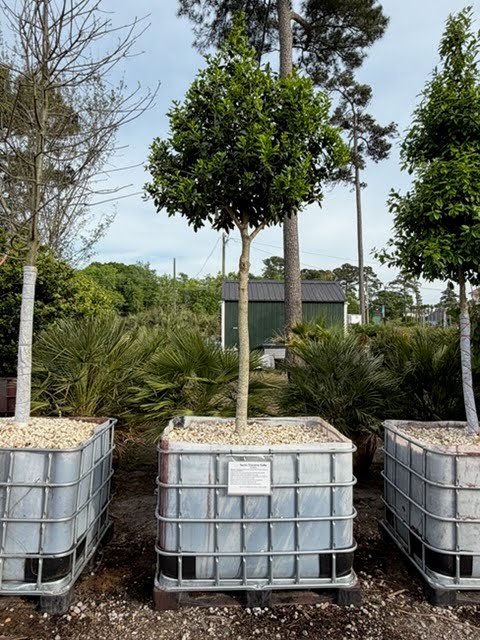

Kay Parris Magnolia
A compact evergreen Southern Magnolia with glossy foliage, fragrant white flowers, and exceptional year-round beauty.
Height/Width: 20–30 ft. tall and 10–15 ft. wide with a narrow pyramidal form.
Overview: A compact Southern Magnolia valued for dense branching, glossy green leaves with copper-brown undersides, and fragrant blooms.
Seasonal Interest: Creamy white lemon-scented flowers bloom from late spring through summer with occasional reblooming. Evergreen foliage provides year-round color, and decorative
seed cones add interest.
Planting: Full sun to partial shade in fertile, well-drained soil.
Watering: Water regularly while establishing, then during prolonged dry periods.
Care: Minimal maintenance. Prune only as needed after flowering and mulch to retain moisture.
Benefits: Evergreen beauty, fragrant flowers, compact size, excellent specimen tree, and year-round curb appeal.
Growth Rate: Moderate, about 1–2 ft. per year.
Why People Love It: Its manageable size, glossy foliage, fragrant blossoms, and elegant appearance.
Did You Know?: Kay Parris is a prized Southern Magnolia cultivar known for its copper-colored leaf undersides and compact growth.
45–60 Gallon / BNB Trees Are Available for Order and Take 1 to 2 Weeks for Deliver
Sweetbay Magnolia
An elegant native magnolia with fragrant creamy-white flowers, glossy foliage, and exceptional four-season beauty.
Height/Width: Typically 20–30 ft. tall and 10–20 ft. wide.
Overview: Sweetbay Magnolia is a beautiful native ornamental tree prized for its fragrant blooms, attractive foliage with silvery leaf undersides, and adaptability to moist soils. It is anexcellent specimen, patio, or naturalized landscape tree.
Seasonal Interest: In late spring through summer, creamy-white lemon-scented flowers bloom among the glossy green foliage, attracting bees and butterflies. Bright red seeds appear infall, providing food for birds. Semi-evergreen to evergreen foliage in the South and smooth gray bark add winter interest.
Planting: Plant in full sun to partial shade in moist, well-drained soil. It also tolerates wetter sites better than many magnolias.
Watering: Water deeply during establishment, then during prolonged dry periods.
Care: Requires little maintenance. Prune only to remove dead or damaged branches after flowering. Mulch to conserve moisture and protect roots.
Benefits: Fragrant flowers, native wildlife value, attractive foliage, adaptable to moist soils, and outstanding year-round beauty.
Growth Rate: Moderate, about 1–2 ft. per year.
Why People Love It: Its fragrant blooms, elegant appearance, native heritage, and dependable performance make it a favorite in Southern landscapes.


Wax Myrtle
A fast-growing native evergreen prized for its fragrant foliage, privacy screening, and adaptability.
Height/Width: Typically 15–25 ft. tall and 10–20 ft. wide with a rounded, multi-stemmed habit.
Overview: Wax Myrtle is a versatile native evergreen that performs well as a screen, hedge, specimen, or small tree. Its aromatic foliage and rapid growth make it a favorite for Southern landscapes.
Seasonal Interest: Fragrant olive-green foliage provides year-round color. Small flowers appear in spring, followed by attractive blue-gray waxy berries on female plants that persist into winter and provide food for birds.
Planting: Plant in full sun to partial shade in well-drained soil. Tolerates sandy soils, salt spray, heat, humidity, and occasional wet conditions.
Watering: Water regularly during establishment. Once established, it is drought tolerant but benefits from occasional deep watering during extended dry periods.
Care: Prune as needed to maintain shape or train into a single-trunk tree. Very low maintenance once established.
Benefits: Excellent privacy screen, native wildlife value, fragrant foliage, salt tolerance, and rapid growth.
Growth Rate: Fast, typically 2–3 ft. per year under favorable conditions.
Why People Love It: Its quick growth, evergreen beauty, fragrant leaves, and ability to thrive in challenging coastal conditions.
Ornamental Trees
Planted for the show — spring flowers, summer bloom, fall color, and handsome bark.

Autumn Brilliance Service Berry
A stunning native ornamental tree with brilliant white spring flowers, edible berries, and exceptional fall color.
Height/Width: Autumn Brilliance Serviceberry typically matures at 15–25 feet tall and 15–20 feet wide with an upright, rounded canopy.
Overview: Autumn Brilliance Serviceberry is a selected cultivar of native serviceberry prized for its four-season beauty, disease resistance, and outstanding orange-red fall foliage. It is ideal as a specimen tree, patio tree, or accent in naturalized landscapes.
Seasonal Interest: In early spring, masses of white flowers cover the branches before the leaves fully emerge, attracting pollinators. Summer brings rich green foliage and sweet purple-red berries enjoyed by birds and people. In autumn, the leaves develop brilliant shades of orange and red before falling. Smooth gray bark and elegant branching provide winter interest.
Planting: Plant in full sun to partial shade in moist, well-drained soil. It adapts to many soil types but performs best with consistent moisture.
Watering: Water deeply during the first growing season. Established trees benefit from supplemental watering during
prolonged dry periods.
Care: Requires little maintenance. Prune after flowering only to remove dead, damaged, or crossing branches. Mulch to conserve moisture and protect roots.
Benefits: Provides beautiful spring blooms, edible berries, outstanding fall color, wildlife value, and dependable performance as a low-maintenance native ornamental tree.
Growth Rate: Moderate, typically growing 1–2 feet per year.
Why People Love It: Customers love Autumn Brilliance Serviceberry for its spectacular four-season interest, manageable size, colorful fall display, and bird-friendly berries.
Did You Know?: The berries resemble small blueberries, are edible, and have long been enjoyed fresh and in jams and pies.
White blooms in spring, edible berries, and beautiful fall color. Attracts birds. Great accent tree.
Moonlight Magic Crape Myrtle
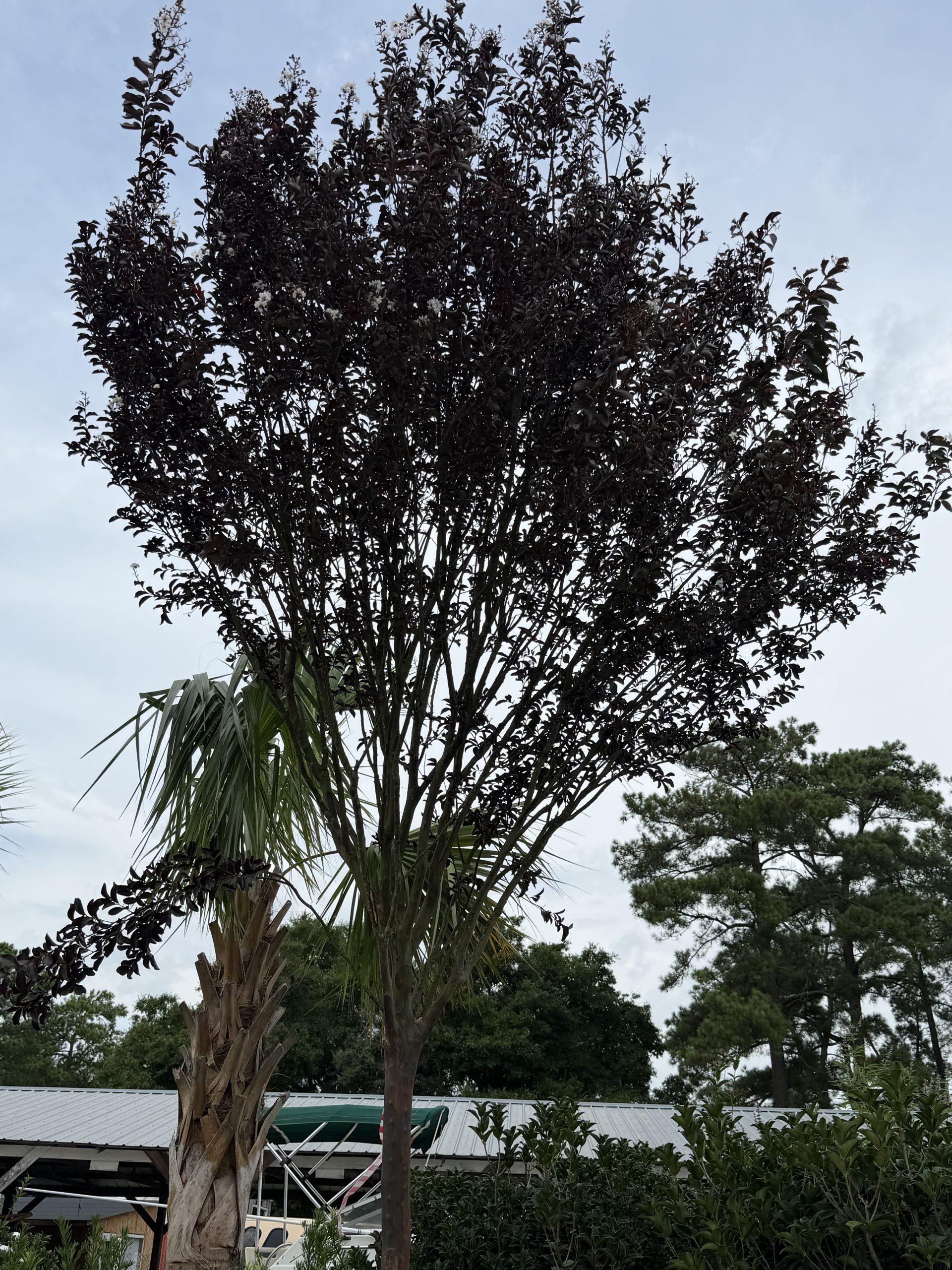
A striking crape myrtle featuring rich burgundy-black foliage and vivid red flowers for spectacular summer color.
Height/Width: Typically 10–12 ft. tall and 8–10 ft. wide with a rounded, upright form.
Overview: Moonlight Magic Crape Myrtle is a compact ornamental tree prized for its dramatic dark foliage and brilliant true red flower clusters. Its long bloom season and excellent disease resistance make it a standout landscape choice.
Seasonal Interest: Deep burgundy-black foliage emerges in spring and retains its rich color throughout the growing season. Brilliant red flower clusters bloom from summer into early fall, followed by attractive exfoliating bark that provides winter interest.
Planting: Plant in full sun in well-drained soil for the best foliage color and flowering performance.
Watering: Water regularly during establishment. Once established, water deeply during prolonged dry periods.
Care: Prune in late winter or early spring to maintain shape and encourage vigorous flowering. Remove spent blooms to encourage reblooming.
Benefits: Outstanding red flowers, dramatic dark foliage, excellent mildew resistance, heat tolerance, and long-lasting summer color.
Growth Rate: Moderate to fast, about 1–2 ft. per year.
Why People Love It: The unique combination of near-black foliage and vibrant red blooms creates unmatched landscape contrast and curb appeal.
Did You Know?: Moonlight Magic is one of the few crape myrtles that combines naturally dark foliage with true red flowers, creating exceptional color contrast throughout the growing

Muskogee Crape Myrtle
An elegant ornamental tree with abundant lavender flowers, beautiful bark, and months of dependable summer color.
Height/Width: Muskogee Crape Myrtle matures at approximately 20–30 feet tall and 15–20 feet wide.
Overview: Muskogee Crape Myrtle is one of the most popular large crape myrtles, prized for its abundant lavender flowers, attractive exfoliating bark, rapid growth, and excellent resistance to powdery mildew.
Seasonal Interest: In spring, new foliage emerges with bronze tones before maturing to rich green. Throughout summer and into early fall, large clusters of soft lavender flowers bloom continuously, attracting butterflies and other pollinators. In autumn, the foliage turns shades of orange, red, and burgundy before dropping. During winter, the smooth exfoliating bark reveals attractive cinnamon, tan, and gray tones that provide year-round landscape interest.
Planting: Plant in full sun for the best flowering. It thrives in well-drained soil and tolerates heat, humidity, drought once established, and coastal conditions.
Watering: Water deeply and regularly during the first growing season. Established trees require supplemental watering only during extended dry periods.
Care: Requires very little maintenance. Prune lightly in late winter to remove dead, damaged, or crossing branches while
maintaining its natural shape. Avoid heavy topping.
Benefits: Provides months of lavender blooms, colorful fall foliage, beautiful exfoliating bark, excellent heat and drought tolerance, reliable disease resistance, and exceptional curb appeal.
Growth Rate: Fast growing, typically adding 2–3 feet of new growth each year under favorable conditions.
Why People Love It: Customers love Muskogee Crape Myrtle for its elegant lavender flowers, attractive bark, rapid growth, and dependable beauty with very little maintenance.
Natchez Crape Myrtle
An elegant ornamental tree with brilliant white blooms, beautiful cinnamon bark, and exceptional disease resistance.
Height/Width: Natchez Crape Myrtle matures at approximately 20–30 feet tall and 15–25 feet.
Overview: Natchez Crape Myrtle is one of the finest crape myrtle selections for Southern landscapes. It is admired for its long-lasting white flowers, striking exfoliating bark, rapid growth, and outstanding resistance to powdery mildew.
Seasonal Interest: In spring, new foliage emerges with bronze tones before maturing to rich green. During summer, large clusters of pure white flowers bloom from early summer into fall, attracting butterflies and other pollinators. As autumn arrives, the foliage turns shades of yellow, orange, and red before dropping. In winter, the smooth exfoliating bark peels away to reveal attractive cinnamon, tan, and cream-colored trunks that provide year-round beauty.
Planting: Plant in full sun for the best flowering. It thrives in well-drained soil and tolerates heat, humidity, drought once established, and coastal conditions.
Watering: Water deeply and regularly during the first growing season. Established trees require supplemental watering only during extended periods of drought.
Care: Requires very little maintenance. Prune lightly in late winter to remove dead, damaged, or crossing branches while preserving its natural form. Avoid heavy topping.
Benefits: Provides months of brilliant white blooms, colorful fall foliage, striking ornamental bark, excellent heat and drought tolerance, and dependable performance with outstanding disease resistance.
Growth Rate: Fast growing, typically adding 2–3 feet of growth each year under favorable conditions.
Why People Love It: Customers love Natchez Crape Myrtle because it delivers spectacular white flowers, beautiful bark, reliable summer color, and an elegant appearance with very little maintenance.


Scarlett Crape Myrtle
Height/Width: Scarlett Crape Myrtle matures at 18–25 feet tall and 12–18 feet wide, forming a graceful upright canopy that provides colorful beauty without overwhelming most landscapes
Overview: Scarlett Crape Myrtle is an outstanding ornamental tree prized for its brilliant scarlet-red flowers, attractive exfoliating bark, colorful fall foliage, and excellent heat tolerance. It provides months of vibrant color while remaining easy to maintain.
Seasonal Interest: In spring, new foliage emerges with attractive reddish-bronze tones before maturing to rich green. During summer, the tree produces abundant clusters of brilliant scarlet-red flowers that bloom continuously from July through September, attracting butterflies, bees, and other pollinators. After flowering, decorative brown seed capsules remain on the branches, adding texture but not producing ornamental berries. In fall, the foliage turns vibrant shades of orange, red, and burgundy before dropping. During winter, the smooth exfoliating bark peels to reveal beautiful cinnamon, tan, and gray tones, providing year-round landscape interest.
.Planting: Scarlett Crape Myrtle in full sun for maximum flowering and the best foliage color. It performs well in well-drained sandy, loamy, or clay soils and tolerates heat, humidity, drought once established, and coastal conditions.
Watering: Water regularly during the first growing season to establish a deep root system. Once established, supplemental watering is generally needed only during prolonged periods of drought.
Care: Scarlett Crape Myrtle is very low maintenance once established. Prune only to remove dead, damaged, or crossing branches while preserving its naturally attractive shape. Avoid heavy topping (“crape murder”), which weakens the tree and reduces flo
Benefits: Scarlett Crape Myrtle is very low maintenance once established. Prune only to remove dead, damaged, or crossing branches while preserving its naturally attractive shape. Avoid heavy topping (“crape murder”), which weakens the tree and reduces flowering.
Growth Rate: This tree has a moderate to fast growth rate, typically growing 1–3 feet per year under favorable conditions.
Why People Love It: Customers love Scarlett Crape Myrtle for its vivid scarlet-red flowers, beautiful bark, dependable summer blooms, colorful fall foliage, manageable size, and exceptional performance in hot Southern climates.
Sioux Crape Myrtle
Height/Width: matures at 15–20 feet tall and 10–15 feet wide
Overview: One of the finest flowering ornamental trees for the South. It is prized for its abundant bright pink blooms, attractive cinnamon-colored exfoliating bark, excellent disease resistance, and exceptional tolerance to heat and humidity.
Seasonal: Spring: new foliage emerges with attractive bronze to reddish tones before maturing to glossy dark green. During summer, the tree produces large clusters of vibrant bright pink flowers that bloom from July through September, attracting butterflies and other pollinators. After flowering, small brown seed capsules remain on the branches, adding subtle texture but not producing ornamental berries. In fall, the foliage turns brilliant shades of orange, red, and burgundy before dropping. During winter, the smooth cinnamon-colored exfoliating bark becomes a standout feature, providing year-round landscape interest.
Planting: Plant in full sun for the best flowering and strongest growth. Sioux Crape Myrtle performs well in well-drained sandy, loamy, or clay soils and tolerates heat, humidity, and coastal conditions exceptionally well.
Water: Water regularly during the first growing season to establish a strong root system. Once established, supplemental watering is generally needed only during extended periods of drought.
Care: Once established, Sioux Crape Myrtle requires very little maintenance. Prune only to remove dead, damaged, or crossing branches while preserving its naturally graceful vase-shaped form. Avoid heavy topping, often called “crape murder,” as it weakens the tree and diminishes its natural beauty.
Benefits: Sioux Crape Myrtle offers months of vibrant pink flowers, attractive exfoliating bark, brilliant fall foliage, excellent resistance to powdery mildew, outstanding heat and drought tolerance once established, and dependable performance in coastal landscapes. It also attracts butterflies and other beneficial pollinators.
Growth Rate: This tree has a moderate to fast growth rate, typically growing 1–3 feet per year under good growing conditions.
Why People Love It: Customers appreciate Sioux Crape Myrtle for its long-lasting bright pink blooms, beautiful bark, colorful fall foliage, dependable disease resistance, manageable size, and exceptional performance in Southern landscapes.


Bloodgood Japanese Maple
A graceful ornamental tree admired for its rich burgundy foliage, elegant form, and outstanding four-season beauty.
Height/Width: 15–20 feet tall and 15–20 feet wide.
Overview: One of the most popular ornamental maples, prized for its deep burgundy foliage, graceful branching, and exceptional landscape value as a specimen or accent tree.
Seasonal Interest: Small reddish-purple flowers appear in spring as burgundy leaves emerge. Summer foliage holds its rich color well, followed by brilliant crimson fall color. Elegant branching and smooth gray bark provide winter interest.
Planting: Plant in full sun to partial shade in well-drained, organically rich soil. Afternoon shade is beneficial in hotter climates.
Watering: Water deeply during establishment and during extended dry periods after establishment.
Care: Prune lightly in late winter or midsummer to remove dead or crossing branches. Mulch around the base to conserve moisture.
Benefits: Spectacular foliage color, elegant form, excellent focal point, and dependable beauty with minimal maintenance.
Growth Rate: Slow to moderate, about 1–2 feet per year.
Why People Love It: Loved for its dramatic burgundy foliage, graceful shape, manageable size, and stunning fall display.
Did You Know?: ‘Bloodgood’ is among the most heat-tolerant Japanese maple cultivars and is renowned for retaining its rich leaf color through the growing season.
Emperor One Japanese Maple
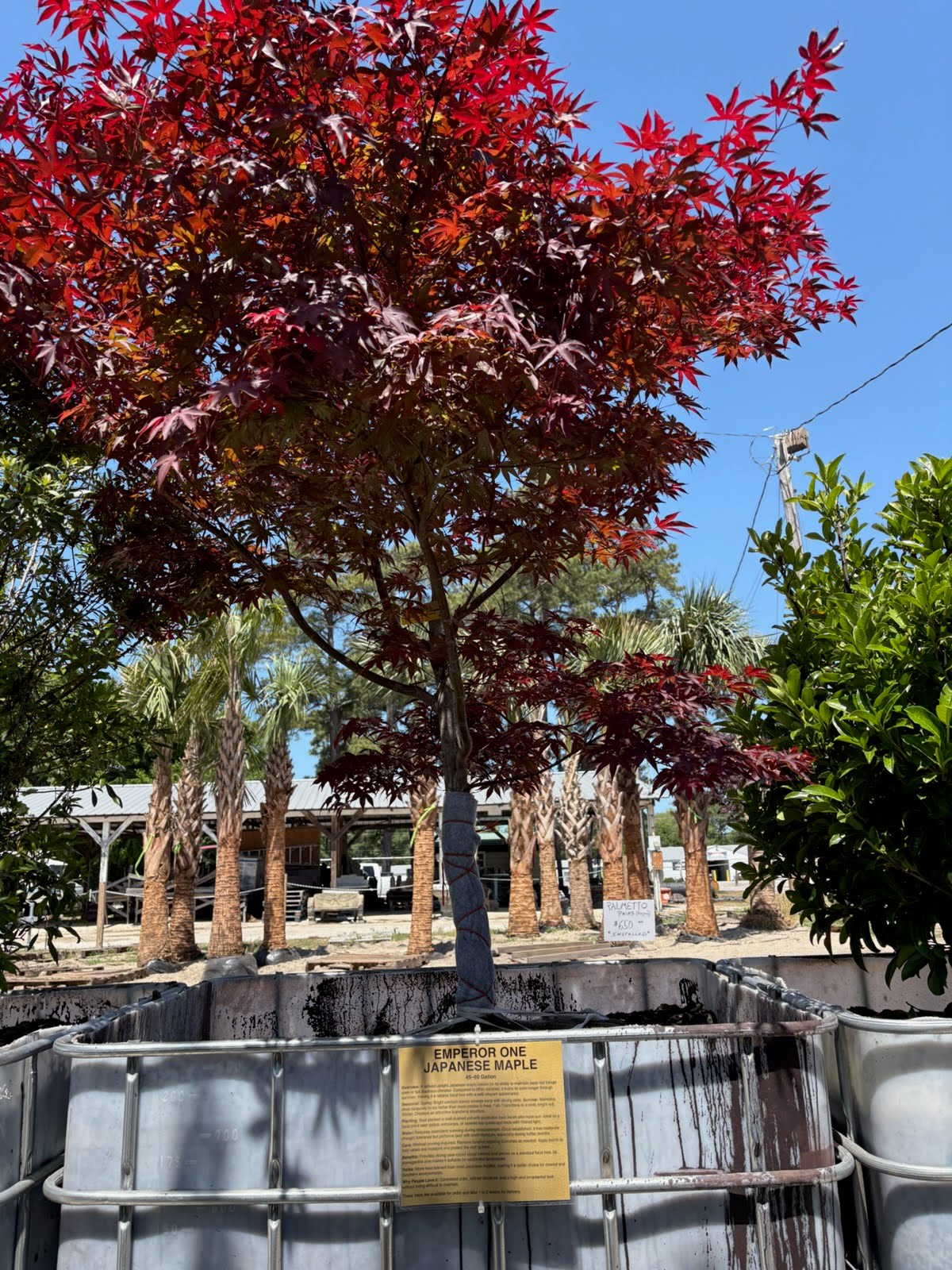
An exceptional ornamental tree with rich crimson foliage, graceful branching, and outstanding four-season beauty.
Height/Width: Emperor One Japanese Maple typically matures at 15–20 feet tall and 12–15 feet wide.
Overview: Emperor One Japanese Maple is prized for its vibrant crimson foliage, improved heat tolerance, and slightly later leaf emergence than many Japanese maples, helping protect new growth from late spring frosts. It is an excellent specimen, patio, or accent tree.
Seasonal Interest: Small reddish-purple flowers appear in spring as the brilliant crimson leaves emerge. Throughout summer, the foliage retains its rich red color, even in warm climates. In autumn, the leaves develop brilliant scarlet-red tones before dropping. During winter, the elegant branching structure and smooth gray bark provide striking architectural interest.
Planting: Plant in full sun to partial shade in well-drained, organically rich soil. Afternoon shade is beneficial in hotter climates to maintain the best foliage color.
Watering: Water deeply during the first growing season to establish a strong root system. Once established, water during
prolonged dry periods.
Care: Requires very little maintenance. Prune lightly during late winter or midsummer to remove dead, damaged, or crossing branches while preserving its natural form. Mulch around the base to retain moisture.
Benefits: Provides spectacular foliage color, graceful form, improved heat tolerance, late leaf emergence for frost protection, and exceptional landscape value.
Growth Rate: Moderate, typically growing 1–2 feet per year under favorable conditions.
Why People Love It: Customers love Emperor One Japanese Maple for its brilliant red foliage, elegant shape, improved heat tolerance, and stunning year-round beauty.

Merrill Magnolia
Height/Width: Typically 20–30 ft. tall and 20–25 ft. wide with a rounded, upright canopy.
Overview: Merrill Magnolia is a hardy hybrid magnolia prized for its abundant fragrant white flowers, attractive branching, and reliable spring performance. It makes an outstanding specimen tree for residential and commercial landscapes.
Seasonal Interest: Masses of fragrant white flowers cover the bare branches in early spring before the foliage emerges. Summer brings rich green leaves, followed by soft yellow fall color. The attractive branching structure provides winter interest.
Planting: Plant in full sun to partial shade in fertile, well-drained soil. Choose a location protected from harsh winds for the best floral display.
Watering: Water deeply during establishment and during prolonged dry periods thereafter.
Care: Prune only after flowering if needed to remove dead or damaged branches. Mulch around the base to conserve moisture.
Benefits: Spectacular spring blooms, fragrant flowers, pollinator attraction, outstanding specimen value, and excellent curb appeal.
Growth Rate: Moderate, about 1–2 ft. per year.
Why People Love It: Its breathtaking white flowers, sweet fragrance, graceful form, and dependable spring display.
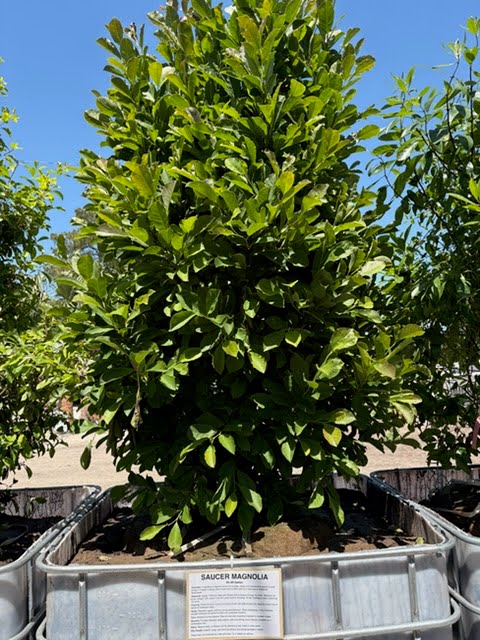
Saucer Magnolia
A spectacular flowering ornamental tree with large tulip-shaped blooms and exceptional spring beauty.
Height/Width: Saucer Magnolia typically matures at 20–30 feet tall and 20–30 feet wide.
Overview: Saucer Magnolia is one of the most popular flowering ornamental trees, prized for its large pink-and-white blossoms, graceful form, and striking spring display. It makes an outstanding specimen tree for residential and commercial landscapes.
Seasonal Interest: In late winter to early spring, large fragrant tulip-shaped flowers in shades of pink, purple, and white cover the bare branches before the leaves emerge, creating a breathtaking display that attracts pollinators. Summer brings lush green foliage, followed by yellow-bronze fall color. During winter, its attractive branching structure provides architectural interest.
Planting: Plant in full sun to partial shade in fertile, well-drained soil. Choose a location protected from strong winds and late frosts when possible for the best flower display.
Watering: Water deeply during the first growing season to establish a healthy root system. Once established, provide supplemental water during extended dry periods.
Care: Requires minimal maintenance. Prune only after flowering to remove dead, damaged, or crossing branches. Apply mulch around the base to retain moisture and keep roots cool.
Benefits: Provides spectacular early spring flowers, outstanding curb appeal, pollinator value, and serves as a stunning focal point in the landscape.
Growth Rate: Moderate, typically growing 1–2 feet per year under favorable conditions.
Why People Love It: Customers love Saucer Magnolia for its breathtaking blooms, graceful shape, manageable size, and unforgettable spring display.

Okame Cherry
An early-blooming ornamental cherry tree with vibrant pink flowers, attractive bark, and brilliant fall color.
Height/Width: Okame Cherry typically matures at 20–30 feet tall and 15–25 feet wide.
Overview: Okame Cherry is one of the earliest flowering ornamental cherry trees, prized for its profusion of rosy-pink blooms, attractive branching, and dependable performance in Southern landscapes. It makes an excellent specimen, lawn, or street tree.
Seasonal Interest: In late winter to early spring, vibrant rosy-pink flowers cover the bare branches before the leaves emerge, providing one of the first signs of spring and attracting early pollinators. Summer brings glossy green foliage, while fall displays brilliant shades of orange, red, and bronze. During winter, its smooth reddish-brown bark and elegant branching add year-round interest.
Planting: Plant in full sun to partial shade in well-drained soil. Full sun encourages the best flowering display and overall tree health.
Watering: Water deeply during the first growing season to establish a strong root system. Established trees benefit from supplemental watering during extended dry periods.
Care: Requires minimal maintenance. Prune only after flowering to remove dead, damaged, or crossing branches while preserving its natural shape. Apply mulch around the base to conserve moisture.
Benefits: Provides spectacular early-season blooms, beautiful fall foliage, attractive bark, supports pollinators, and serves as a stunning focal point in the landscape.
Growth Rate: Moderate to fast, typically growing 1–2 feet per year under favorable conditions.
Why People Love It: Customers love Okame Cherry for its cheerful early spring flowers, reliable performance, manageable size, and exceptional four-season beauty.
Did You Know?: Okame Cherry is a hybrid developed for improved heat tolerance, making it one of the best ornamental cherry trees for the southeastern United States.
Vitex Chaste Tree
A long-blooming ornamental tree with fragrant purple flower spikes that attract butterflies and pollinators all summer.
Height/Width: Typically 15–20 ft. tall and 15–20 ft. wide.
Overview: Vitex Chaste Tree is a fast-growing ornamental prized for its long season of fragrant purple flower spikes, attractive gray-green foliage, and outstanding heat and drought tolerance.
Seasonal Interest: Large fragrant purple flower spikes bloom from late spring through summer, often reblooming if lightly pruned. Aromatic foliage provides texture throughout the growing season, while attractive branching adds winter interest.
Planting: Plant in full sun in well-drained soil. Thrives in hot, sunny locations and adapts to many soil types.
Watering: Water regularly during establishment. Once established, it is highly drought tolerant and requires only occasional watering.
Care: Prune during late winter to encourage vigorous new growth and abundant flowering. Remove spent flower spikes to encourage additional blooms.
Benefits: Long flowering season, attracts butterflies and bees, drought tolerant, deer resistant, and low maintenance.
Growth Rate: Fast, typically 2–3 ft. per year under favorable conditions.
Why People Love It: Its vibrant blooms, fragrant flowers, pollinator value, and exceptional summer color make it one of the South’s favorite flowering trees.
Did You Know?: Vitex is often called the ‘Lilac of the South’ because of its fragrant purple flower spikes and long blooming season.


Yoshino Cherry
A graceful flowering cherry treasured for its spectacular spring blossoms and elegant shape.
Watering: Water deeply during the first few growing seasons. Once established, provide supplemental water during extended dry periods.
Care: Requires little maintenance. Prune only after flowering to remove dead, damaged, or crossing branches. Apply mulch to help conserve moisture and protect roots.
Benefits: Offers one of the finest spring flower displays available, attracts early pollinators, provides light shade, and adds exceptional beauty and curb appeal.
Growth Rate: Moderate to fast, averaging 1–2 feet of growth each year under good conditions.
Why People Love It: Customers love Yoshino Cherry because its spectacular spring bloom creates an unforgettable display, while its graceful form brings elegance to landscapes throughout the year.
Privacy & Screening Trees
Dense, fast-growing screens that block views, cut wind and noise, and soften a property line.

Japanese Cedar (Radicans Cryptomeria)
Height/Width: 20–40 ft. tall × 15–24 ft. wide.
.Overview: A beautiful, fast-growing evergreen with soft blue-green foliage and a naturally pyramidal shape. Japanese Cedar provides year-round color, screening, and a soft, graceful appearance in the landscape.
Seasonal Interest: A beautiful, fast-growing evergreen with soft blue-green foliage and a naturally pyramidal shape. Japanese Cedar provides year-round color, screening, and a soft, graceful appearance in the landscape..
Planting: Plant Japanese Cedar in full sun to part shade in well-drained soil. Water regularly during establishment and provide enough room for its mature size and broad, pyramidal growth.
Watering: Japanese Cedar needs moderate watering. Water regularly during establishment, then maintain consistent moisture as needed, especially during dry periods. It performs best in moist, well-drained soil.
Care: Japanese Cedar is relatively low maintenance once established. Provide consistent moisture, maintain good air circulation, and remove any dead or damaged branches as needed. Its natural pyramidal shape generally requires little pruning.
Benefits: Japanese Cedar provides year-round evergreen color, fast growth, excellent screening, and a soft, natural appearance, making it useful for privacy screens, windbreaks, property borders, and large landscape areas.
Growth Rate: Fast-growing, typically adding about 1–2 feet per year when young and growing in good conditions.
Why People Love It: People love Japanese Cedar for its soft blue-green foliage, fast growth, year-round beauty, and excellent screening ability, making it a beautiful choice for privacy, windbreaks, and large landscape spaces.
Green Giant Arborvitae
A fast-growing evergreen prized for exceptional privacy, rich green foliage, and year-round beauty.
Height/Width: Green Giant Arborvitae typically reaches 40–60 feet tall and 12–18 feet wide.
Overview: Green Giant Arborvitae is one of the most popular evergreen screening trees thanks to its rapid growth, dense foliage, and outstanding resistance to pests and diseases. It is ideal for privacy screens, windbreaks, and property borders.
Seasonal Interest: Tiny pollen cones appear in spring but are not showy. Bright green foliage remains lush through summer,
then deepens to a rich green-bronze in winter without significant browning. Its dense evergreen form provides color, privacy, and structure throughout every season.
Planting: Plant in full sun to partial shade in well-drained soil. Space adequately to allow mature growth when creating a screen.
Watering: Water deeply during the first growing seasons. Once established, water during extended dry periods.
Care: Requires minimal maintenance. Prune lightly only if shaping is needed, and mulch around the base to conserve moisture.
Benefits: Provides outstanding year-round privacy, fast growth, excellent wind protection, deer resistance compared with
many arborvitae, and dependable landscape performance.
Growth Rate: Fast, commonly growing 3–5 feet per year under favorable conditions.
Why People Love It: Customers appreciate Green Giant Arborvitae for creating an attractive living privacy fence quickly while remaining easy to maintain.
Did You Know?: Green Giant Arborvitae is a hybrid that combines rapid growth with excellent resistance to many common arborvitae pests and diseases.


Burford Holly
A dense evergreen holly with glossy foliage, bright red berries, and outstanding year-round landscape appeal.
Height/Width: Burford Holly typically matures at 8–15 feet tall and 8–12 feet wide, forming a dense, rounded evergreen shrub or small tree.
Overview: Burford Holly is a dependable evergreen prized for its lustrous dark green leaves, abundant red berries, and naturally dense growth. It is ideal for privacy screens, hedges, foundation plantings, or as a specimen plant.
Seasonal Interest: Small, fragrant white flowers bloom in spring and attract pollinators. Rich glossy green foliage provides year-round color, while bright red berries develop in fall and often persist through winter, attracting birds and adding vibrant seasonal interest.
Planting: Plant in full sun to partial shade in well-drained soil. It adapts well to a variety of soil types and tolerates heat and humidity.
Watering: Water deeply during the first growing season to establish a healthy root system. Established plants require supplemental watering only during extended dry periods.
Care: Requires minimal maintenance. Prune after berry display or in late winter to maintain shape. Apply mulch around the
base to help conserve soil moisture.
Benefits: Provides year-round evergreen beauty, attractive berries, excellent screening, wildlife value, and dependable
performance with few pest problems.
Growth Rate: Moderate, typically growing 1–2 feet per year under favorable conditions.
Why People Love It: Customers love Burford Holly for its lush evergreen foliage, abundant red berries, low-maintenance, and versatility in Southern landscapes.
Eagleston Holly
A fast-growing evergreen with glossy foliage and a naturally elegant form, perfect for privacy and year-round beauty.
Height/Width: Eagleston Holly typically matures at 20–30 feet tall and 10–15 feet wide.
Overview: Eagleston Holly is one of the most popular evergreen trees in the Southeast because of its attractive glossy leaves, rapid growth, and adaptability. It works equally well as a specimen tree, privacy screen, or windbreak.
Seasonal Interest: In spring, small fragrant white flowers bloom and attract bees and other pollinators. Throughout summer, the glossy evergreen foliage provides rich green color. Female trees produce bright red berries in fall that often persist through winter, attracting songbirds while the evergreen foliage provides year-round landscape interest.
Planting: Plant in full sun to partial shade in well-drained soil. Eagleston Holly adapts well to sandy, loamy, and clay soils and tolerates heat, humidity, and coastal conditions.
Watering: Water deeply during the first growing season to establish a strong root system. Once established, water during prolonged dry periods.
Care: Requires very little maintenance. Prune as needed to maintain its natural shape or create a hedge. Apply mulch around the root zone while keeping it away from the trunk.
Benefits: Provides year-round evergreen beauty, excellent privacy screening, colorful berries, wildlife value, heat tolerance, and dependable performance in Southern landscapes.
Growth Rate: Moderate to fast, typically growing 2–3 feet per year under favorable conditions.
Why People Love It: Customers love Eagleston Holly because it grows quickly, stays attractive throughout the year, requires very little maintenance, and creates an outstanding privacy screen or specimen tree.


East Palatka Holly
A beautiful evergreen holly with glossy foliage, abundant red berries, and an attractive pyramidal canopy.
Height/Width: Typically 30–40 ft. tall and 15–20 ft. wide with a broad pyramidal form.
Overview: East Palatka Holly is a vigorous evergreen shade tree valued for its glossy dark green leaves, strong branching, and heavy crops of bright red berries. It is excellent as aspecimen tree, street tree, or privacy planting.
Seasonal Interest: Small white flowers bloom in spring and attract pollinators. Rich evergreen foliage provides year-round beauty, while brilliant red berries appear in fall and often persist through winter, attracting songbirds.
Planting: Plant in full sun to partial shade in well-drained soil. Adapts well to heat, humidity, and a variety of soil conditions.
Watering: Water regularly during establishment, then deeply during extended dry periods.
Care: Prune lightly if shaping is desired. Mulch around the base to conserve moisture and suppress weeds.
Benefits: Evergreen color, attractive berries, wildlife value, dependable shade, and low-maintenance performance.
Growth Rate: Moderate, about 1–2 ft. per year.
Why People Love It: Its glossy foliage, abundant winter berries, graceful form, and dependable year-round beauty.
Did You Know?: East Palatka Holly was discovered near East Palatka, Florida, and is one of the most widely planted landscape hollies in the Southeast.
Needlepoint Holly
spine
A graceful evergreen holly with glossy foliage, bright red berries, and an elegant upright form for year-round beauty.
Height/Width: Needlepoint Holly typically matures at 15–25 feet tall and 10–15 feet wide with a naturally pyramidal, upright form.
Overview: Needlepoint Holly is a versatile evergreen valued for its lustrous dark green leaves, attractive red berries, and dense branching. It is an excellent choice for privacy screens, specimen plantings, entryways, and formal landscapes.
Seasonal Interest: Small, fragrant white flowers bloom in spring and attract bees and other pollinators. Rich evergreen foliage provides year-round color, while bright red berries develop in fall and often persist through winter, attracting songbirds and adding vibrant seasonal interest.
Planting: Plant in full sun to partial shade in well-drained soil. It adapts to a variety of soil types and performs well in the heat and humidity of the Southeast.
Watering: Water deeply during the first growing season to establish a healthy root system. Established plants require supplemental watering only during extended dry periods.
Care: Requires minimal maintenance. Prune in late winter or after berry display if shaping is desired. Mulch around the base to conserve moisture and reduce weeds.
Benefits: Provides evergreen privacy, colorful berries, wildlife value, excellent heat tolerance, and dependable low-maintenance performance.
Growth Rate: Moderate, typically growing 1–2 feet per year under favorable conditions.
Why People Love It: Customers love Needlepoint Holly for its elegant shape, glossy evergreen foliage, abundant berries,


Nellie Stevens Holly
Height/Width: Typically 20–30 ft. tall and 10–15 ft. wide with a dense pyramidal form.
Overview: Nellie Stevens Holly is one of the most popular evergreen landscape trees, valued for its rapid growth, rich green foliage, and abundant bright red berries. It is ideal for privacy screens, windbreaks, and specimen plantings.
Seasonal Interest: Small white flowers bloom in spring and attract pollinators. Glossy evergreen foliage provides year-round beauty, while vivid red berries develop in fall and often persist through winter, attracting songbirds.
Planting: Plant in full sun to partial shade in well-drained soil. Adapts well to a wide range of soil conditions and thrives in the Southeast.
Watering: Water deeply during establishment, then during extended dry periods.
Care: Requires little maintenance. Prune lightly if shaping is desired. Mulch around the base to conserve moisture and suppress weeds.
Benefits: Excellent privacy screen, evergreen color, wildlife value, heat tolerance, and dependable low-maintenance performance.
Growth Rate: Fast, typically 2–3 ft. per year under favorable conditions.
Why People Love It: Its dense evergreen foliage, colorful berries, rapid growth, and year-round landscape appeal make it a customer favorite.
Did You Know?: Nellie Stevens Holly produces abundant berries without requiring a nearby male holly, making it an easy choice for home landscapes.
Robin Holly
An evergreen holly with glossy foliage and bright red berries that provide year-round landscape appeal.
Height/Width: Robin Holly typically matures at 15–20 feet tall and 10–15 feet wide
Overview: Robin Holly is an attractive evergreen valued for its lustrous dark green foliage, naturally full form, and abundant bright red berries on female plants when a compatible male pollinator is nearby.
Seasonal Interest: New growth and small white flowers emerge in spring. Dense evergreen foliage provides year-round color through summer. Bright red berries decorate female plants throughout fall and winter, attracting songbirds and adding seasonal interest.
Planting: Plant in full sun to partial shade in well-drained soil. It adapts to many soil types and performs well in residential and commercial landscapes.
Watering: Water regularly during the first growing season. Once established, water during prolonged dry periods for best growth.
Care: Requires minimal maintenance. Prune lightly to maintain shape or remove dead or damaged branches. Apply mulch to help conserve soil moisture.
Benefits: Provides year-round evergreen beauty, colorful winter berries, excellent screening and privacy, wildlife value, and dependable landscape performance.
Growth Rate: Moderate, averaging about 1–2 feet of growth each year under favorable conditions.
Why People Love It: Customers love Robin Holly because it offers rich evergreen color, beautiful berries, a naturally dense habit, and an elegant appearance with very little maintenance.


Savannah Holly
An elegant evergreen holly with glossy foliage, abundant red berries, and a naturally pyramidal form.
Height/Width: 30–40 ft. tall and 15–20 ft. wide.
Overview: Savannah Holly is a fast-growing evergreen prized for its dense branching, dark green leaves, and heavy display of bright red berries. It is an excellent specimen tree, privacy screen, or property border.
Seasonal Interest: Small white flowers bloom in spring and attract pollinators. Rich evergreen foliage provides year-round color, while brilliant red berries develop in fall and often remainthrough winter, attracting songbirds and adding lasting seasonal beauty.
Planting: Plant in full sun to partial shade in well-drained soil. Adapts well to heat, humidity, and a variety of soil types.
Watering: Water deeply during establishment, then during prolonged dry periods.
Care: Prune only as needed to maintain shape. Mulch around the base to conserve moisture and suppress weeds.
Benefits: Excellent evergreen privacy, attractive berries, wildlife value, dependable growth, and low-maintenance performance.
Growth Rate: Moderate to fast, about 1–2 ft. per year.
Why People Love It: Its elegant shape, glossy evergreen foliage, colorful berries, and dependable year-round beauty.
Spartan Holly
A dense evergreen holly with glossy foliage, abundant red berries, and an excellent naturally pyramidal shape.
Height/Width: 15–25 ft. tall and 8–12 ft. wide.
Overview: Spartan Holly is a dependable evergreen ideal for privacy screens, specimen plantings, and formal landscapes. Its dense branching and rich green foliage provide year-roundbeauty with very little maintenance.
Seasonal Interest: Small white flowers bloom in spring and attract pollinators. Glossy evergreen foliage remains attractive throughout the year, while bright red berries appear in fall and often persist through winter, providing color and food for birds.
Planting: Plant in full sun to partial shade in well-drained soil. Adapts well to heat, humidity, and a variety of landscape conditions.
Watering: Water deeply during establishment, then during extended dry periods.
Care: Prune lightly only if shaping is desired. Mulch around the base to conserve moisture and reduce weeds.
Benefits: Excellent evergreen screening, colorful berries, wildlife value, heat tolerance, and dependable low-maintenance performance.
Growth Rate: Moderate, about 1–2 ft. per year.
Why People Love It: Its tidy upright habit, glossy foliage, bright berries, and year-round landscape appeal.
Naturally pyramidal shape adds height without excessive width. Dense evergreen coverage year-round. Great for lining property edges and driveways.


Wirtwimm Holly
A dense evergreen holly with glossy foliage and bright red berries, perfect for privacy and year-round color.
Height/Width: Wirtwimm Holly typically matures 15–20 feet tall and 8–12 feet wide.
Overview: Wirtwimm Holly is a dependable evergreen holly valued for its dense branching, rich green foliage, and attractive red berries on female plants when a compatible male pollinator is nearby. It is an excellent choice for screens, hedges, or specimen plantings.
Seasonal Interest: Small white flowers bloom in spring and attract pollinators before giving way to glossy evergreen foliage throughout summer. In fall and winter, bright red berries decorate female plants and provide food for birds while the evergreen leaves maintain rich color all year.
Planting: Plant in full sun to partial shade in well-drained soil. It adapts to a variety of soil types and performs well in both residential and commercial landscapes.
Watering: Water deeply during the first growing season to establish a healthy root system. Once established, water during extended dry periods.
Care: Requires very little maintenance. Prune lightly to maintain its natural shape or as a formal hedge. Apply mulch to help retain soil moisture.
Benefits: Provides year-round evergreen color, outstanding privacy, colorful winter berries, wildlife value, and excellent tolerance of heat and humidity.
Growth Rate: Moderate, typically growing about 1–2 feet each year under favorable conditions.
Why People Love It: Customers appreciate Wirtwimm Holly for its dense evergreen habit, attractive berries, low-maintenance nature, and dependable performance in Southern landscapes.
Taylor Juniper
Taylor Juniper is a tall, narrow, columnar evergreen with attractive blue-green foliage.
Height/Width: 20–25 ft tall × 3–4 ft wide at maturity.
Overview: A tall, narrow evergreen with blue-green foliage and a naturally upright, columnar shape. Taylor Juniper adds year-round structure and is especially useful for privacy screens, narrow planting spaces, and areas where a vertical accent is desired.
Seasonal Interest: Blue-green evergreen foliage provides year-round color and structure. Its narrow, upright form adds a strong vertical accent to the landscape in every season..
Planting: Plant in full sun to partial shade in well-drained soil. Allow enough space for the tree’s mature height and narrow width, and avoid planting where standing water collects. Water regularly during establishment.
Watering: Water regularly during the first growing season to help establish a strong root system. Once established, Taylor Juniper is drought tolerant and generally needs watering only during extended dry periods. Avoid overwatering or keeping the soil consistently wet.
Care: Low maintenance once established. Prune only as needed to maintain its narrow, upright shape. Remove dead or damaged branches and avoid heavy pruning into old wood. Fertilize in spring if needed, and maintain good air circulation around the tree.
Benefits: Taylor Juniper provides year-round evergreen color and structure, offers excellent privacy in narrow spaces, is drought tolerant once established, and requires little maintenance while adding a strong vertical accent to the landscape.
Growth Rate: Moderate to fast growth, typically adding about 12–18 inches per year when young and growing in good conditions.
Why People Love It: People love Taylor Juniper for its tall, narrow shape, year-round blue-green color, and low-maintenance nature, making it an excellent choice for privacy, narrow spaces, and adding a beautiful vertical accent to the landscape.

Shade Trees
Big canopy trees that cool the yard, shade the house, and grow into the centerpiece of a landscape.

Chinese Elm
A graceful shade tree with attractive bark, fine-textured foliage, and outstanding adaptability.
Height/Width: Typically 40–60 ft. tall and 35–50 ft. wide with a broad, rounded canopy.
Overview: Chinese Elm is a durable, fast-growing shade tree valued for its graceful branching, attractive mottled bark, and tolerance of heat, drought, and urban conditions. It makes an excellent lawn, street, or specimen tree.
Seasonal Interest: Small, inconspicuous flowers appear in late summer to early fall, followed by tiny winged seeds. Lustrous green foliage provides dense summer shade before turning yellow to bronze in fall. Its colorful exfoliating bark adds striking winter interest.
Planting: Plant in full sun to light shade in well-drained soil. Adaptable to a wide range of soil types and environmental conditions.
Watering: Water regularly during establishment. Once established, it tolerates drought but benefits from deep watering during prolonged dry spells.
Care: Requires minimal maintenance. Prune when young to develop strong branch structure and remove dead or damaged limbs as needed.
Benefits: Excellent shade, attractive exfoliating bark, heat and drought tolerance, disease resistance, and long life.
Growth Rate: Moderate to fast, typically 2–3 ft. per year.
Why People Love It: Its graceful appearance, dependable performance, beautiful bark, and cooling shade make it a favorite landscape tree.
Did You Know?: Chinese Elm is highly resistant to Dutch elm disease, making it one of the most reliable elm species for modern landscapes.
Ginkgo
Height/Width:40-60ft tall x 23-35ft wide at maturity.
Overview: An exceptionally durable shade tree known for its unique fan-shaped leaves, excellent resistance to pests and diseases, and spectacular golden fall color. One of the oldest tree species in the world, it thrives in both residential and urban landscapes.
Seasonal: Spring: small inconspicuous flowers. Fall: Brilliant Golden Color.
Planting: Performs best in full sun and adapts well to a wide variety of well-drained soil types. Highly tolerant of heat, pollution, and urban conditions.
Water: Water regularly during establishment. Mature trees tolerate drought and require little supplemental watering.
Care: Very low-maintenance once established. Light pruning while young encourages a strong branch structure. Mature trees require little pruning.
Benefits: Brilliant golden fall color, Distinctive fan-shaped leaves, Excellent pest and disease resistance, Drought tolerant once established, Long-lived (can live for centuries), Excellent urban tree, and Heat and pollution tolerant
Notes: Slow to moderate growth, typically 12-24 inches of growth per year.
Why People Love It: Customers love its unique fan-shaped foliage, dependable golden fall color, exceptional durability, and ability to thrive for generations with very little maintenance.
These trees are available for order and take 1 to 2 weeks for delivery.


Nuttall Oak
A fast-growing native oak prized for its stately form, excellent shade, and brilliant red fall color.
Height/Width: Nuttall Oak matures at approximately 40–60 feet tall and 35–50 feet wide.
Overview: Nuttall Oak is a native hardwood known for its rapid growth, strong structure, and outstanding adaptability. It is an excellent shade tree for residential properties, parks, and commercial landscapes, offering beauty and long-term value.
Seasonal Interest: In spring, inconspicuous flowers bloom as fresh green leaves emerge. During summer, the dense canopy provides cooling shade with rich green foliage. In fall, the leaves turn brilliant shades of scarlet and deep red before dropping. Winter showcases its sturdy branching structure, while developing acorns provide an important food source for wildlife.
Planting: Plant in full sun in well-drained soil. Nuttall Oak adapts to a wide range of soils, including clay, and tolerates occasional wet conditions once established.
Watering: Water deeply and regularly during the first growing seasons to establish a healthy root system. Established trees require supplemental watering only during extended periods of drought.
Care: Requires minimal maintenance. Prune only to remove dead, damaged, or crossing branches during the dormant season. Apply mulch around the base to retain moisture while keeping it away from the trunk.
Benefits: Provides excellent shade, spectacular fall color, valuable wildlife habitat, long life, strong storm resistance, and excellent adaptability to Southern landscapes.
Growth Rate: Fast growing, typically adding 2–3 feet of new growth each year under favorable conditions.
Why People Love It: Customers love Nuttall Oak because it grows quickly into a majestic shade tree, develops beautiful fall color, and becomes a lasting investment for future generations.
Overcup Oak
A hardy native shade tree valued for its adaptability, strong branching, and dependable beauty in wet or dry landscapes.
Height/Width: Overcup Oak typically matures at 40–60 feet tall and 35–50 feet wide, developing a broad, rounded canopy that provides generous shade.
Overview: Overcup Oak is a long-lived native oak known for its adaptability, attractive rounded crown, and ability to thrive in a variety of soils, including sites that experience seasonal flooding. It is an excellent choice for large residential landscapes, parks, and commercial properties.
Seasonal Interest: In spring, inconspicuous flowers appear as fresh green leaves emerge. Throughout summer, the dense canopy provides cooling shade with rich green foliage. In fall, the leaves turn shades of yellow to brown before dropping.
During winter, its sturdy branching structure and distinctive acorns, which are mostly enclosed by their caps, provide lasting interest and valuable food for wildlife.
Planting: Plant in full sun in well-drained soil. Although it tolerates occasional flooding and poorly drained sites better than many oaks, it also performs well in average landscape soils once established.
Watering: Water deeply during the first growing seasons to establish a healthy root system. Mature trees require supplemental watering only during prolonged drought.
Care: Requires minimal maintenance. Prune during the dormant season to remove dead, damaged, or crossing branches. Apply mulch around the base while keeping it away from the trunk.
Benefits: Provides dependable shade, excellent wildlife habitat, strong storm durability, exceptional adaptability to difficult soils, and long-term landscape value.
Growth Rate: Moderate, typically growing 1–2 feet per year under favorable conditions.
Why People Love It: Customers appreciate Overcup Oak for its toughness, longevity, attractive form, and ability to thrive where many other shade trees struggle.


Willow Oak
A graceful native shade tree with fine-textured foliage, exceptional longevity, and outstanding landscape value.
Height/Width: Willow Oak matures at approximately 40–60 feet tall and 35–50 feet wide, developing a broad, rounded canopy that provides excellent shade.
Overview: Willow Oak is a beautiful native oak recognized for its narrow, willow-like leaves, strong branching structure, and adaptability. It is widely planted as a long-lived shade tree for residential properties, parks, and commercial landscapes.
Seasonal Interest: In spring, small, inconspicuous flowers appear as fresh green leaves emerge. Throughout summer, its fine-textured canopy provides dense, cooling shade. In fall, the foliage turns golden yellow to bronze before dropping. During winter, its strong branching structure and developing acorns add visual interest while providing an important food source for wildlife.
Planting: Plant in full sun in well-drained soil. Willow Oak adapts well to clay, loam, and sandy soils and tolerates occasional wet conditions once established.
Watering: Water deeply and regularly during the first growing seasons to establish a healthy root system. Mature trees require supplemental watering only during extended periods of drought.
Care: Requires very little maintenance. Prune during the dormant season to remove dead, damaged, or crossing branches. Apply mulch around the root zone while keeping it away from the trunk.
Benefits: Provides abundant shade, excellent wildlife habitat, attractive fine-textured foliage, long life, strong storm durability, and dependable performance in Southern landscapes.
Growth Rate: Moderate to fast, typically growing 1–2 feet per year under favorable conditions.
Why People Love It: Customers love Willow Oak because it combines elegant foliage, dependable shade, low maintenance, and exceptional longevity, making it a favorite for large landscapes.
Red Maple
A fast-growing native shade tree celebrated for its brilliant fall color and exceptional year-round beauty.
Height/Width: Red Maple matures approximately 40–60 feet tall and 30–50 feet wide.
Overview: Red Maple is one of the most popular native shade trees in the eastern United States. It is valued for its rapid growth, adaptability, attractive branching, and spectacular autumn color, making it an outstanding choice for residential and commercial landscapes.
Seasonal Interest: In late winter to early spring, clusters of small red flowers bloom before the leaves emerge, creating one of the first colorful displays of the season. New foliage opens with reddish tones before turning rich green throughout summer. In fall, the canopy transforms into brilliant shades of scarlet, orange, and red. During winter, its graceful branching pattern and gray bark continue to provide landscape interest.
Planting: Plant in full sun to partial shade in moist, well-drained soil. Although adaptable to many soil types, Red Maple performs best where adequate moisture is available.
Watering: Water deeply and regularly during establishment. Once established, provide supplemental watering during extended dry periods, especially in hot weather.
Care: Requires minimal maintenance. Prune only to remove dead, damaged, or crossing branches, preferably in late summer or early fall. Apply mulch around the root zone while keeping it away from the trunk.
Benefits: Provides excellent shade, brilliant seasonal color, valuable wildlife habitat, adaptability to many landscape conditions, and lasting beauty that increases curb appeal.
Growth Rate: Fast growing, typically adding 2–3 feet of new growth each year under favorable conditions.
Why People Love It: Customers appreciate Red Maple because it quickly becomes a beautiful shade tree while delivering one of the most spectacular fall color displays of any native tree.
